BackIPO valuation

IPO valuation

Unitree
2026-08-19 04:30:46

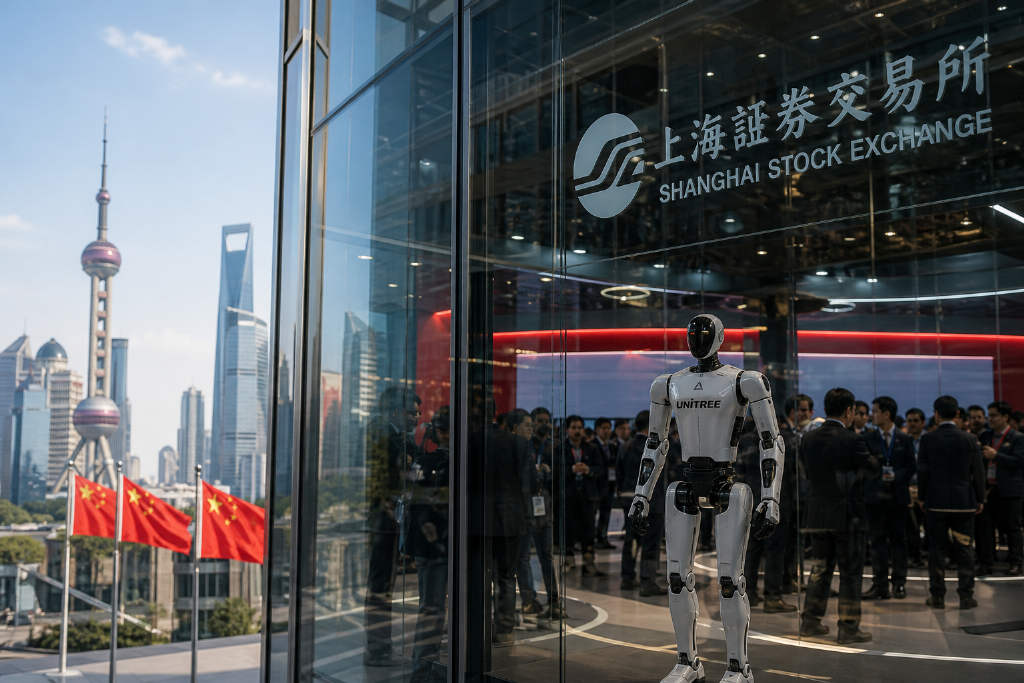
Unitree opens on STAR Market at 1,100 yuan, briefly pushing valuation to 445 billion yuan

Unitree Technology made its debut on Shanghai’s STAR Market on Aug. 19, turning the long-discussed label of “A-share’s first humanoid robot stock” into a listed reality. The stock opened at 1,100 yuan, up 629.44% from its 150.80-yuan issue price, and its market capitalization briefly climbed to 445 billion yuan before pulling back. At the time of writing cited in the source article, the shares were trading around 892 yuan, valuing the company at roughly 361 billion yuan, with turnover reaching 55.25% and trading volume exceeding 15.3 billion yuan. The listing stood out not only for its first-day price action but also for its unusually tight float. Unitree’s post-listing unrestricted shares amounted to 30.0877 million, or 7.44% of total share capital. The online allotment rate was just 0.0181%, setting records on the STAR Market for both the lowest winning rate and the highest number of participating accounts. Strategic investors including the National Social Security Fund, DeepSeek, Tencent, PetroChina Kunlun Capital, China Southern Power Grid and China Telecom’s Tianyi Capital took part in the placement. The source article frames Unitree’s listing as both a wealth-creation event and a valuation test for China’s embodied AI and robotics sector. It also tracks founder Wang Xingxing’s holdings, compares Unitree with Figure AI, Boston Dynamics and Tesla’s Optimus, and lays out the company’s own responses on valuation, FCC restrictions, international competition and commercialization pace.
70
Unitree opens on STAR Market at 1,100 yuan, briefly pushing valuation to 445 billion yuan
Hefei model
2026-08-18 11:55:08

Changxin’s IPO thrust Hefei’s state capital strategy into focus as paper gains topped RMB 1 trillion

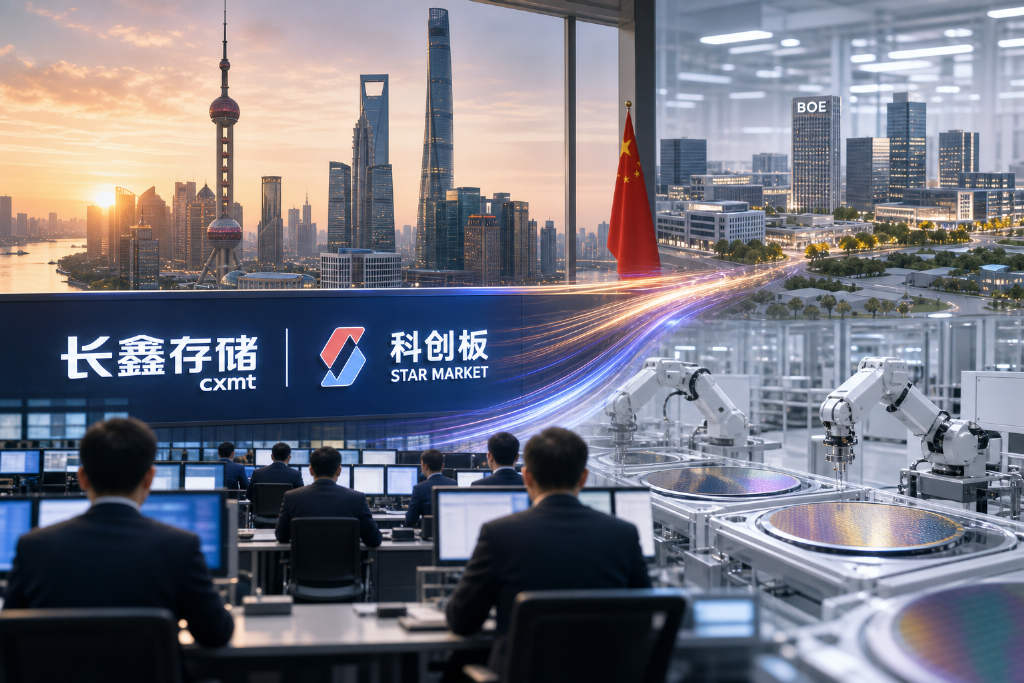
Changxin Memory’s market debut on Shanghai’s STAR Market on July 27, 2026, turned a long-running industrial bet by Hefei into one of the most discussed capital stories in China. The company opened at its RMB 8.66 offer price, surged more than 465% by the close, and finished its first day with a market capitalization of about RMB 3.3 trillion. On the following day, its valuation briefly climbed to RMB 3.66 trillion. That move sharply lifted the value of Hefei’s state-owned holdings. Based on the final ownership structure cited in the source article, Hefei’s state capital system was sitting on paper gains of more than RMB 1 trillion, built from cumulative investment of roughly RMB 26 billion to RMB 30 billion over nearly a decade. The article traces that outcome back to 2016, when Zhu Yiming pushed a DRAM industrialization plan that many places declined as too risky, while Hefei agreed to back the project. The report also links Changxin with an earlier BOE investment in 2008 to explain what is now widely called the “Hefei model”: using patient state capital to support strategically important industries through long loss-making cycles, then using the capital market to reprice those holdings. At the same time, the article argues the model is not easy to duplicate. It points to four factors behind Hefei’s result: unusual policy continuity, specialized state investment platforms, favorable timing tied to the AI-driven memory boom, and organizational discipline that many other cities have struggled to match.

60
Changxin’s IPO thrust Hefei’s state capital strategy into focus as paper gains topped RMB 1 trillion
Anthropic
2026-08-18 11:45:51

Anthropic’s revenue run rate hits $65 billion as valuation talk climbs past $2 trillion

Anthropic’s annualized revenue run rate topped $65 billion by the end of July, according to BlockBeats, up from $47 billion in May and more than seven times higher than roughly $9 billion at the end of 2025. The company’s preliminary second-quarter revenue exceeded $11.5 billion, marking at least a 14-fold increase from a year earlier. Reuters had previously reported that Anthropic set a 2028 revenue target of $190 billion to $200 billion. That target has fueled debate around the company’s potential IPO valuation, with market discussion moving beyond $2 trillion and some investors arguing that $3 trillion is not out of reach. Under a theoretical scenario in which Anthropic reaches $200 billion in revenue in 2028 and is valued at 50 times sales, its market capitalization would reach $10 trillion. The report said that expectation is tied to a broader AI cycle linking models, compute and capital, with companies such as Nvidia and Amazon backing frontier AI labs through investments, financing and data center construction, while model developers including Anthropic and OpenAI sit at the center of demand for AI infrastructure.

60
Anthropic’s revenue run rate hits $65 billion as valuation talk climbs past $2 trillion
Anthropic
2026-08-16 01:58:24

Anthropic Pre-IPO contract jumps more than 21% in four days, implying a $1.802 trillion valuation

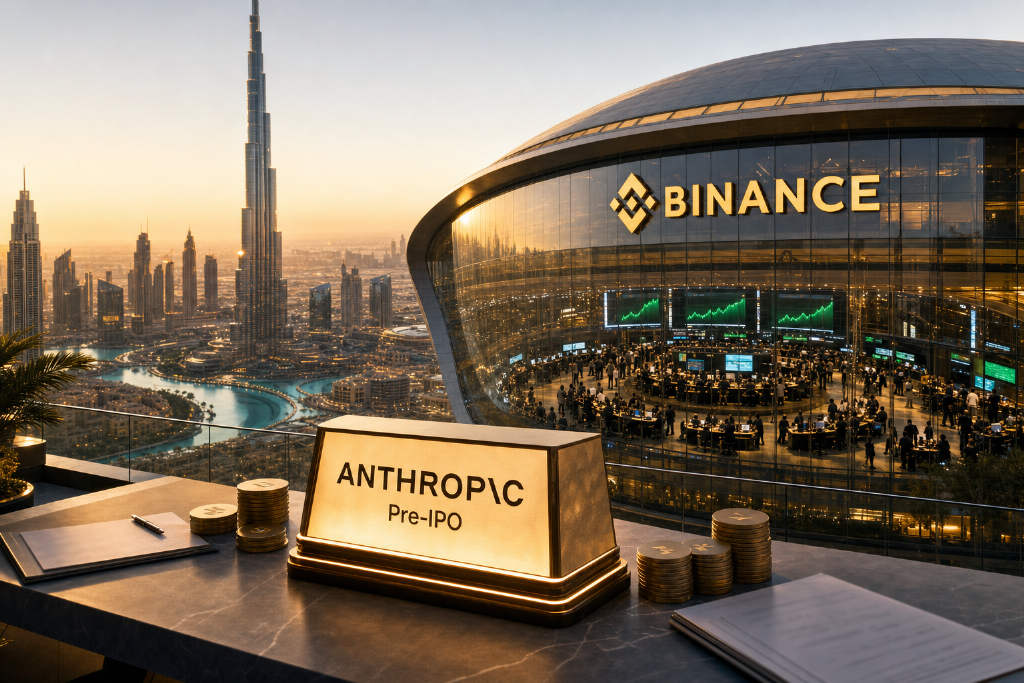
The ANTHROPIC Pre-IPO pair on Binance rose 8.47% over the past 24 hours to $1,802, extending its four-day gain to more than 21%, with 24-hour trading volume reaching $19.57 million. Using the contract’s current price of about 1,802 USDT and a reference share count of 1 billion, the implied valuation for Anthropic stands at roughly $1.802 trillion. Earlier, the Financial Times cited six Anthropic investors who said rapid growth in demand and revenue for Claude could justify a valuation close to $2 trillion, roughly double the company’s $965 billion valuation in May. Based on that $2 trillion reference point, the contract still suggests about 11% theoretical upside. The report also said investors are focused mainly on revenue growth: Anthropic said in May that annualized revenue had topped $47 billion, and those investors expect that figure could reach $100 billion to $120 billion by year-end. One investor said a 30x revenue multiple could support a $3 trillion valuation, though the estimates were described as investor forecasts, and several investors said Anthropic executives have not yet settled on an IPO valuation target in private discussions.

30
Anthropic Pre-IPO contract jumps more than 21% in four days, implying a $1.802 trillion valuation
Anthropic
2026-08-15 04:55:31

Gavin Baker questions reported Anthropic valuation and recounts Dario remarks from inside the company

Anthropic’s reported IPO ambitions and the valuation chatter around them took center stage in the latest episode of the All-In Podcast, where investor Gavin Baker argued that the widely circulated $2 trillion figure should not be treated as final pricing before a formal S-1 filing appears. Baker said pre-IPO valuation leaks often reflect jockeying among underwriting banks, not a settled market conclusion. He also said people he trusts told him that Anthropic CEO Dario Amodei had, in internal settings, floated the idea that Anthropic could one day become the only private company left in the world, leaving a future with only Anthropic and governments. Baker called that an “Anthropic maximalist” worldview and said that if Amodei really said it, he should stop repeating it. Even so, Baker gave the company high marks on operating performance, saying revenue is still expanding quickly even as OpenAI, Grok, and open-source models pressure share in some areas. The episode also focused on a harder constraint than demand: compute, data centers, and energy. Baker and David Sacks both framed Anthropic’s path around whether it can keep its technical lead, preserve premium pricing for Claude, and secure the physical infrastructure needed for another large step up in growth.

940
Gavin Baker questions reported Anthropic valuation and recounts Dario remarks from inside the company
Fidelity
2026-08-14 01:59:25

Fidelity seeks staking for FETH as Anthropic investors float a possible $2 trillion-plus IPO valuation

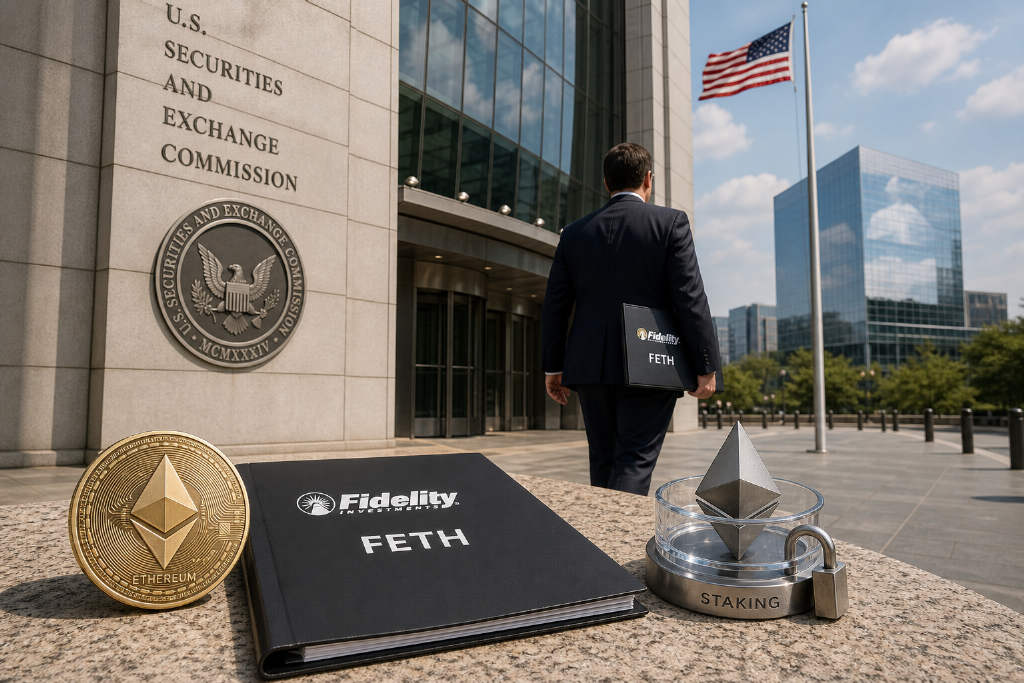
A dense 24-hour news cycle brought fresh filings, earnings, market calls and regulatory signals across crypto and adjacent tech markets. Fidelity filed an amended registration statement with the U.S. Securities and Exchange Commission on Aug. 11 to add ETH staking to its spot Ethereum ETF, the Fidelity Ethereum Fund (FETH). Under normal conditions, the fund said it could stake as much as 100% of the ETH it holds, with no minimum staking threshold, and its investment objective would change to include staking rewards if approved. Elsewhere, some existing Anthropic investors said the AI company could be valued at more than $2 trillion if it goes public as early as October, with one investor putting the upside case at $3 trillion based on a roughly 30x revenue multiple. The estimates remain investor forecasts, and several investors said Anthropic management has not set an IPO valuation target. The session also featured quarterly updates from Bullish, BitGo and Securitize, new SEC steps around tokenized fund operations and tokenized equities, ETF flow data for Bitcoin and Ethereum products, and a series of policy, infrastructure and security developments spanning Europe, the U.K., Brazil and the U.S.

240
Fidelity seeks staking for FETH as Anthropic investors float a possible $2 trillion-plus IPO valuation
Unitree
2026-08-14 02:23:28

Unitree’s IPO valuation faces scrutiny as industrial-use robot revenue stays below 3%

Unitree Technology’s Sci-Tech Innovation Board IPO has drawn intense retail demand and equally sharp valuation criticism. The company set its offering price at RMB 150.80 per share on Aug. 6, implying a market capitalization of RMB 60.993 billion and a price-to-earnings ratio of 219.23 times. On Aug. 10, the day of online subscription, 9.78 million retail investors participated, and the preliminary valid subscription multiple reached 8,288.82 times, resulting in a record-low winning rate for the STAR Market. At the same time, offshore and crypto-linked premarket pricing moved even higher: Hiive quotes reportedly touched $61.63 per share, while the UNITREE-USDC perpetual contract on Hyperliquid briefly traded near $90, implying a valuation of roughly $35.47 billion, or about RMB 239 billion, nearly four times the IPO market cap. Odaily’s original article argues that the valuation premium rests heavily on expectations for humanoid robots, even though Unitree’s own disclosures show most humanoid revenue still comes from research, education, and demonstration use cases rather than scaled industrial deployment. The report also points to slowing profit growth, revised risk disclosures, and cautious comments from analysts and investors as reasons the company’s valuation may face a tougher fundamental test over time.

100
Unitree’s IPO valuation faces scrutiny as industrial-use robot revenue stays below 3%
Gate Research
2026-08-13 16:51:08

Gate Research Institute Examines Whether Crypto Platforms Can Break IPO Allocation Barriers

Gate Research Institute has published a detailed study on crypto-based IPO Access products, arguing that the key question is not how much a stock rises on its debut, but how much of that return end investors can actually capture after allocations, fees, capital lockups, and exit timing are taken into account. The report maps the full financing-to-exit chain for traditional companies, then places crypto distribution models on top of that structure rather than treating them as a replacement for the conventional underwriting and custody system. The study separates the market into three product types: real IPO allocations, Pre-IPO private shares or SPV interests, and structured Pre-IPO tokens such as Mirror Notes that do not grant direct equity ownership. It also distinguishes between Gate’s IPO Access product, which routes successful allocations into a Gate Stock account, and Gate Pre-IPOs, where products like the OPENAI Asset Certificate represent contingent payout structures instead of actual OpenAI shares. Using a unified SpaceX scenario, the report compares a traditional broker channel with Gate’s IPO Access model. With a $13,500 subscription, a 3% allocation rate, a 3-day capital freeze, and a first-day close of $160.95 versus a $135 offering price, the report calculates a net return of about 0.54% for the traditional broker and 0.39% for Gate after a 5% subscription fee on allocated shares. The conclusion is direct: the core competitive variable in IPO Access is access to real allocation, not the headline first-day gain alone.

140
Gate Research Institute Examines Whether Crypto Platforms Can Break IPO Allocation Barriers